
Polonnaruwa is located in North Central Province, Sri Lanka, about a couple of hours from the coast, surrounded by flat plains, reservoirs, and long quiet roads.
It was once Sri Lanka’s royal capital, and the history here can still be read in the surviving stones. Palaces without roofs. Temples whose stones have been smoothed by the weather. Calm, looking statues rather than staged ones.
This is exactly the pull that the place exercises over the visitors. There is profundity but no disorder. You can fully occupy yourself with exploring for one whole day and still have leftover energy to sit by Parakrama Samudra when the light fades.
Should you be organizing a major Sri Lanka tour, a crystal, clear guide is what you need here. Wander Tropics brings you practical itineraries, attraction breakdowns, and travel tips that make places like Polonnaruwa less difficult to navigate, especially if your time is limited.
Why Visit Polonnaruwa?
King Parakramabahu I, a ruler reputed for Greatness and farsightedness, brought Polonnaruwa to the limelight in the 12th century. He redeveloped the city to be the capital of Sri Lanka and filled the temples, palaces, and a water system that is even partially still running today with his royal treasury. What is left is not ornamented ruins but structural ones. One can easily walk from the courtyard to the staircases and the audience hall without needing a light or guessing.
This kind of transparency is one of the reasons why Polonnaruwa was granted the status of a World Heritage Site by UNESCO. The place provides a full account of medieval city life rather than just isolated glimpses.
Unlike Anuradhapura, Polonnaruwa does not extend over a large area. The main attractions are located so close to each other that it is quite natural to walk and very easy to cycle. You are not spending hours just to get between two ruins. This alters the tempo completely.
It is a perfect one day trip, but it is also perfect if you have a few extra days to spare.. You can lengthen your stay just by watching the light change over the stone. Wait for school kids to go past. You will find yourself sitting longer than you planned to. Photographers love it for the open sightlines. First time visitors like it because it is neither confusing nor rushed. Culture focused tourists are also pleased because the layout is quite understandable.
Floral trees grow near the stone carvings.
Best Places To Visit in Polonnaruwa
Almost all of the major attractions of Polonnaruwa are located in the Ancient City area. They are so close to each other that you won’t have to plan your transport all the time in order to visit them. Such a layout completely changes the feeling of the day. You don’t have to travel between the distant stops. You are just following your own rhythm. From stone to shade. From ruin to reservoir. It is always good to have a general idea of the route, especially when there is a time constraint, and this is the point where a good guide really comes in handy. Wander Tropics divides the area into small loops that are easily manageable, whether you are being shown around by a local guide or doing it solo with a map and a bit of patience.
Polonnaruwa Ancient City
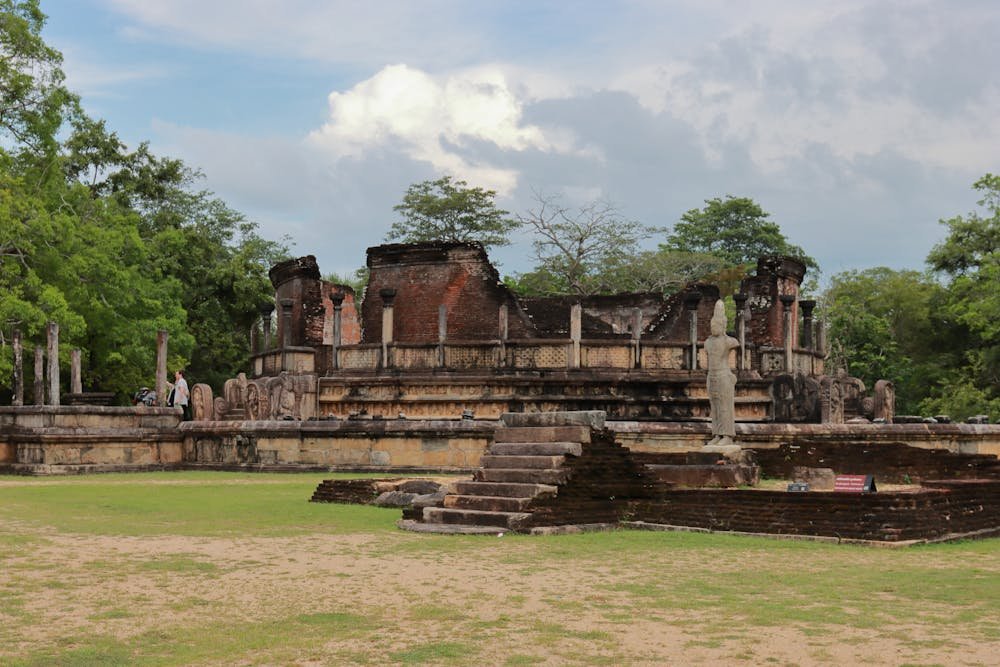
This is the core of Polonnaruwa and everything else is just the periphery. The archaeological zone includes royal palaces, audience halls, monasteries, image houses, and ceremonial spaces that still give the impression of being well connected rather than scattered. You’ll pass the ruins of King Parakramabahu’s palace that was a multi, storey building at a time, then, after a corner, you will find an empty shrine with monks who lived and studied in it.
What most people appreciate is how easily the site can be understood. The king’s audience halls are still oriented towards the open courtyards, so even without plaques at every few steps, it’s not difficult to conceive that there were gatherings and processions. It is because of this clearness that the Ancient City is the foundation of any trip to Polonnaruwa. If you do not visit it, the rest goes without context.
Both the Sri Lanka Department of Archaeology and UNESCO are very good at providing historical background and details about preservation. If you want to hear these from a guide and have your day planned without any guesswork, Wandertropics offers guided itineraries.
Gal Vihara
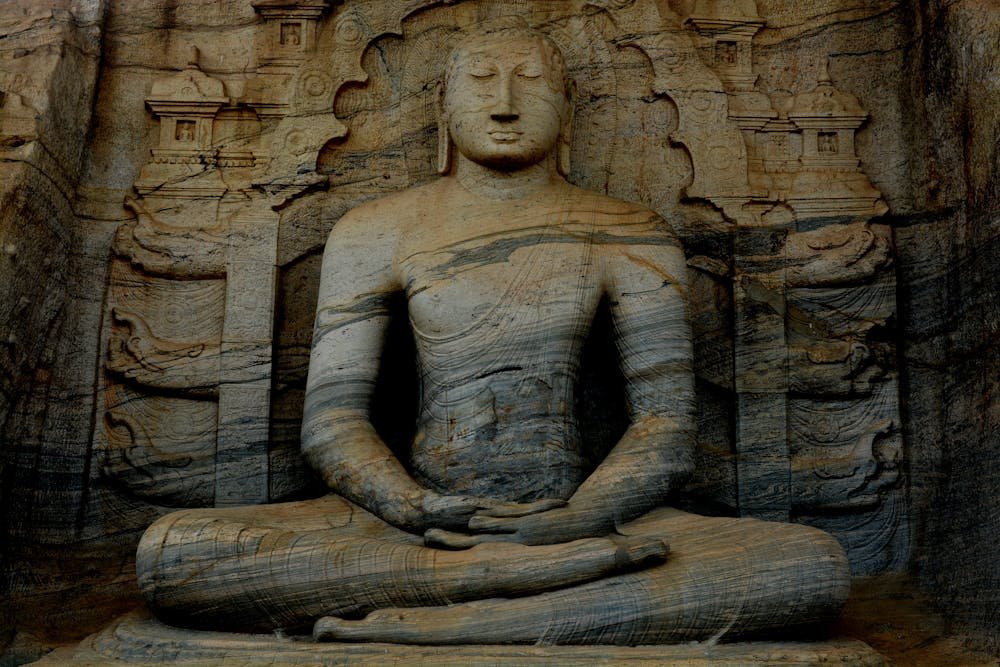
Gal Vihara contains a series of Buddha sculptures engraved directly into the granite rock face. The figures show a Buddha seated in deep meditation, a standing figure the scholars debate very much, and a long reclining Buddha that naturally brings people to silence.
The carvings at this location are widely regarded as some of the best Sinhalese stone sculptures due to the artists’ control and restraint. The lines are crisp and the faces depict tranquility. Nothing seems to be forcibly or decoratively done. There is a subtle emotional attraction that does not depend on the grandeur of the work. The visitors themselves are surprised when they find their voices lowered.
The best time is early morning when the light gently illuminates the carvings, and there are few people around. Late afternoon brings warmer colors but also more people.
Parakrama Samudra
Parakrama Samudra is not a sea, although its name may suggest so. It is a huge man-made reservoir that was constructed during the rule of King Parakramabahu I, to store and distribute water in the region.
Nowadays the reservoir defines the character of a Polonnaruwa visit. It is spacious, serene, and large. Birds glide over the water. Fishermen gently paddle along the banks. And sunset makes everything beautiful. This is where most of the tourists stop after spending a few hours in the ruins. They sit. They watch the lighting change. Then they let the day go before coming back.
Royal Palace of King Parakramabahu
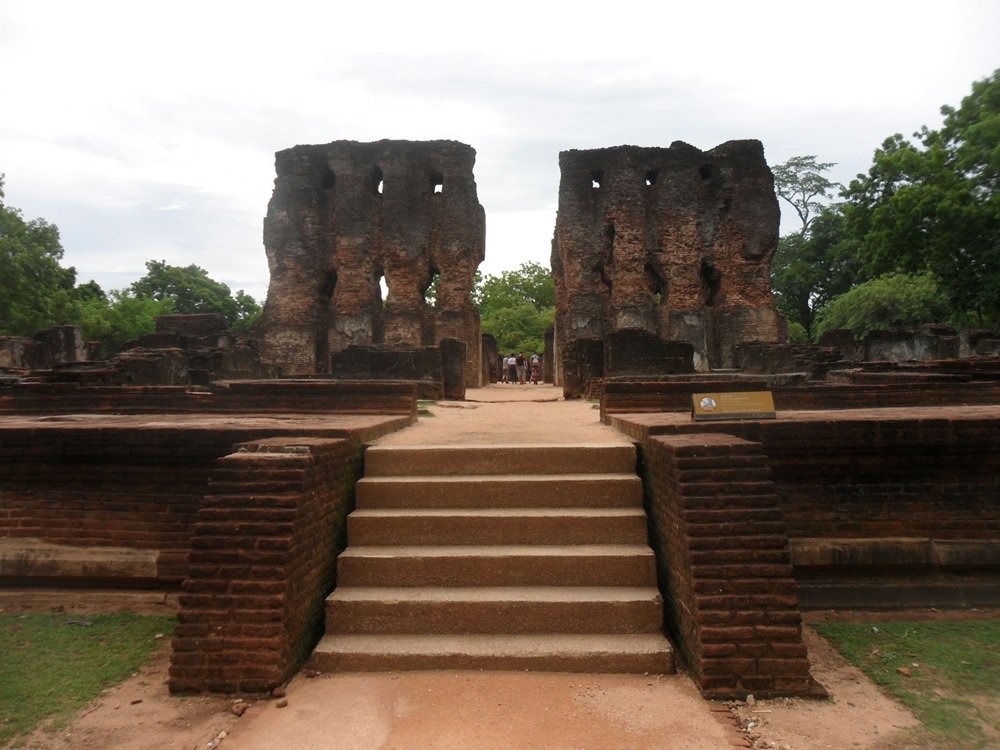
Mostly the walls and foundations are what can be seen of the Royal Palace, yet the scale still stands. This must have been a huge, multi, storey building with hundreds of rooms, designed to demonstrate power as well as to provide comfort.
Experts think that the palace was a home as well as a political hub. Try to picture the shiny floors, the fabrics gleaming, and the couriers going from one piece to another. The ruins don’t show it. But the floor plan is the very essence of the story.
Rankoth Vehera
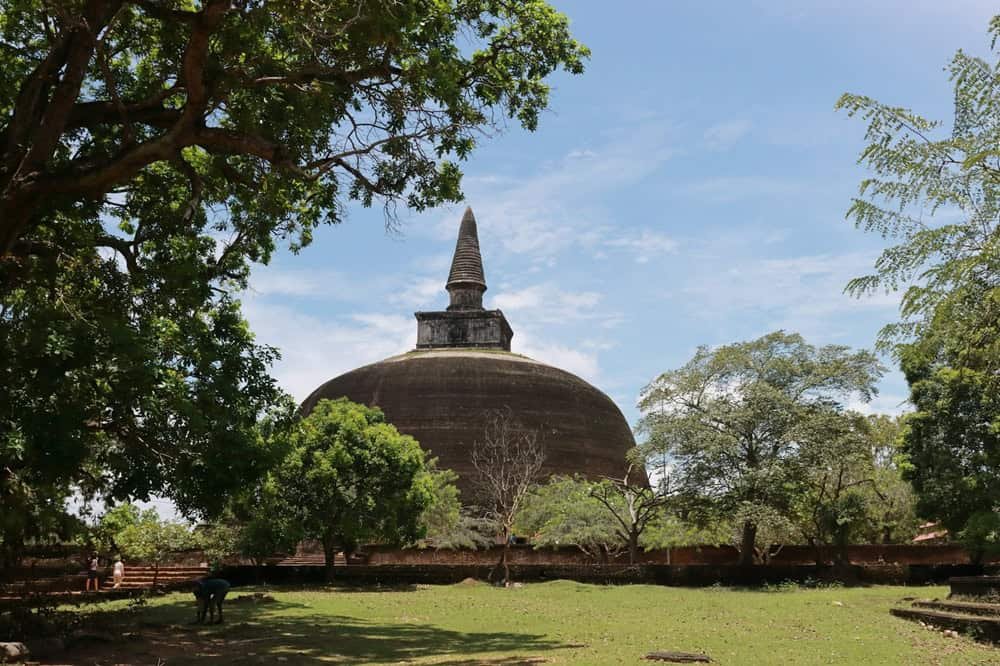
Rankoth Vehera rises clean and white against the surrounding greenery, its shape is familiar to anyone who’s visited Sri Lanka’s ancient capitals. The stupa was built during Polonnaruwa’s peak and reflects strong influence from Anuradhapura’s earlier designs.
Its religious role remains central. Pilgrims still circle the base, offering flowers and time. Compared to Anuradhapura’s massive stupas, Rankoth Vehera feels slightly more contained, but no less serious in presence. It anchors the spiritual side of the city, offering a moment of stillness between more complex ruins.
Vatadage
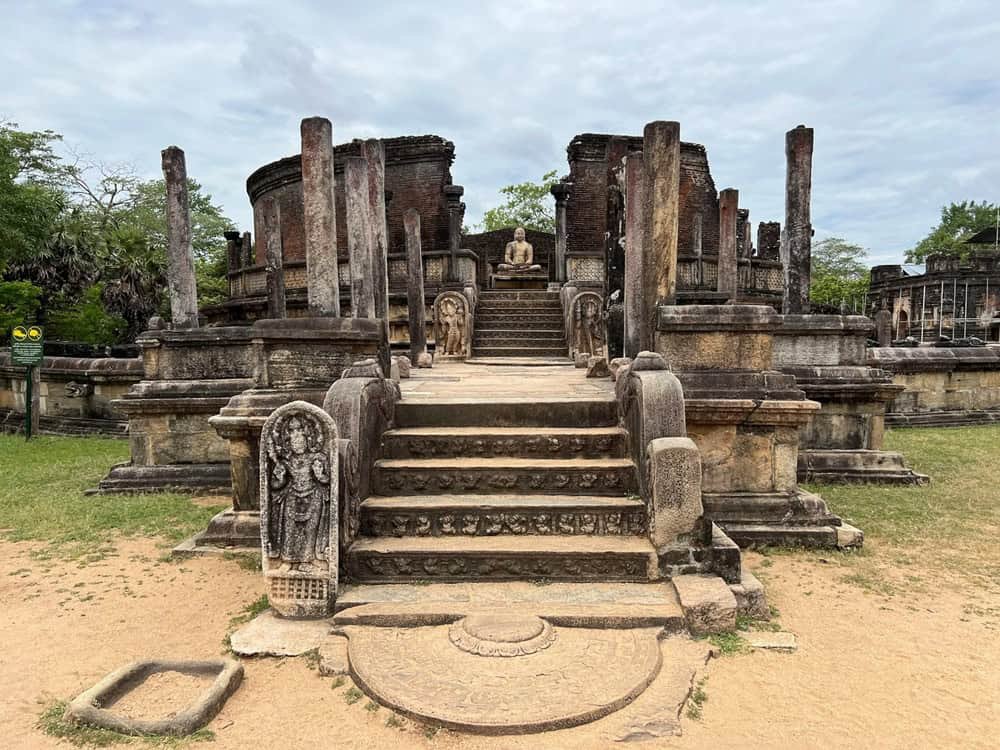
Vatadage stands out immediately because of its form. It is circular, layered and carefully balanced. The structure once housed sacred relics, and every design choice points inward. Moonstones mark the entrances. Guard stones stand watch. Columns suggest a roof that once enclosed the space.
It’s one of the most photographed spots in Polonnaruwa, partly because it reads well from every angle. There’s no wrong side to approach from. Symbolically, the circular design reflects protection and continuity, ideas that mattered deeply in ancient Sri Lankan Buddhism. Even without knowing the details, people sense that intention.
Polonnaruwa Sivan Temple
The Sivan Temple adds a different texture to Polonnaruwa’s story. Built during periods of South Indian influence, it reflects the presence of Hindu worship alongside Buddhism, particularly during the Chola occupation.
The stonework feels denser. The layout follows a different rhythm. Standing here, the contrast becomes clear. This isn’t a footnote. It’s evidence of cultural overlap and exchange. Visiting the Sivan Temple alongside Buddhist monuments deepens understanding of Polonnaruwa as a living city shaped by more than one belief system.
Best Time to Visit Polonnaruwa
Weather and seasons
Polonnaruwa is located in the dry zone of Sri Lanka, and this is the main factor that determines the visitor’s experience. Usually, the dry months fall between May and September. During the day it is hot, the skies are clear, and the ruins look very beautiful under the strong light. This time is great for sightseeing, especially if you like to walk or cycle from one site to another.
The rainy season usually starts from October to January which is the time of the northeast monsoon. Rainfall is not continuous but in heavy showers. The vegetation becomes lush, water bodies are replenished, and the weather becomes a bit cooler. February to April is the transitional period with fewer rains and the heat is not so severe. This time is often considered by travelers as a great time to visit as it is comfortable and less tiring.
Crowds and travel experience
Polonnaruwa doesn’t attract the same volume of visitors as some coastal or hill destinations, but it still has busy moments. December through March sees the highest numbers, especially around school holidays and peak travel season. Mornings fill quickly at popular spots like Gal Vihara.
For a quieter experience, late May and June often feel calmer. Fewer tour groups. More space to move. Evenings stretch longer. Early starts help year-round, regardless of season.
Practical planning tips
Light clothes are the best choice. Here, it is more important that fabrics be breathable than fashionable. Take a water bottle with you and keep on filling it up. There is some shade, but it can get pretty exposed when you walk between ruins.
If you are not familiar with the history, then guided tours are a great help because they give a lot of context. Travelers who like to move at their own pace can go for solo exploration. Sri Lanka’s official tourism and meteorological sites are good sources if you want to check the climate information.
The city is a great place if you are willing to wait. Only when you stop for a minute, you become aware of the fact that at one time here was a great intermingling of religion, governance, and everyday life. You miss that sort of thing if you are in a hurry. It becomes more and more visible the more time you spend on it.
For travelers mapping out a Sri Lanka itinerary, Wander Tropics offers clear guides, attraction breakdowns, and planning support that fits real travel rhythms, not packed schedules. It’s a solid place to start if Polonnaruwa sits on your route.
Frequently Asked Questions
The core stops sit inside the Ancient City. That includes the Royal Palace complex, Gal Vihara, Vatadage, Rankoth Vehera, and the surrounding monasteries and audience halls. Outside the dense ruins, Parakrama Samudra adds space and calm, while the Sivan Temple introduces a different cultural layer.
One day works for highlights. You can cover the Ancient City, Gal Vihara, and a short stop at Parakrama Samudra without rushing if you start early. It isn’t enough for slow wandering or deeper reading of the ruins. A second day gives room to linger, revisit sites in different light, and absorb details that tend to blur when time’s tight.
Polonnaruwa is known for its well-preserved ancient city, especially structures from the reign of King Parakramabahu I. Gal Vihara stands out for its rock-carved Buddha statues, often cited among the finest in Sri Lanka. The city is also famous for hydraulic engineering, particularly Parakrama Samudra, which supported agriculture across the region.
Entry requires a ticket purchased at the main office near the site. Prices change from time to time and vary for foreign visitors. It’s best to check the latest fees through the Sri Lanka Department of Archaeology or official tourism websites before arriving.

Editorial Staff at Wander Tropics are Sri Lanka travel experts.